
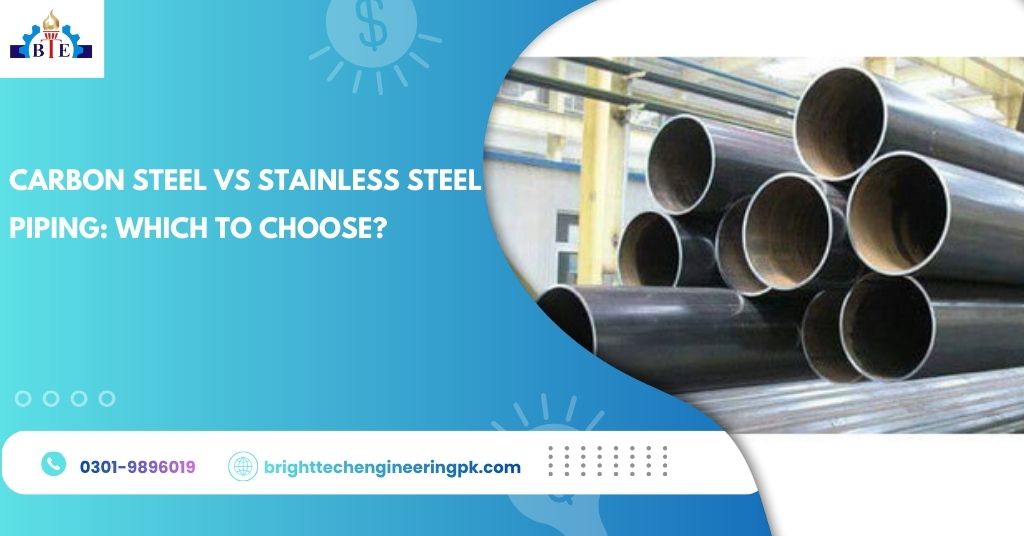
Choosing the right pipe material is essential for ensuring safe, reliable, and cost-effective system performance. Carbon steel pipe and stainless steel pipe are two of the most common pipe materials and typically the choice comes down to understanding the benefits and limitations of the piping material selection. In comparing CS and SS piping, there are many factors that come into play, such as corrosion resistance, durability, cost considerations, and the environment. Here, we explore these factors in further detail to aid in your decision-making process.
Understanding the Basics
What Are Carbon Steel Pipes?
Carbon steel pipe is composed primarily of iron and carbon, which makes it strong and hard. For this reason, carbon steel pipe is widely used in industries like oil and gas exploration and extraction, power generation, and structural applications that are subjected to high pressure. In comparing carbon steel piping to stainless steel piping, carbon steel generally receives a favorable consideration due to its affordability and mechanical strength.
What Are Stainless Steel Pipes?
Stainless steel pipes have chromium, which form a protective barrier to eliminate rust and corrosion. They are often put to use in chemical processing, water treatment and food processing operations, along with any other conditions where moist or corrosive conditions exist. In comparing CS to SS piping, stainless steel provides longevity and sanitary conditions in the piping.
Key Differences Between Carbon Steel and Stainless Steel Piping
Corrosion Resistance
The key difference between CS vs SS piping is corrosion resistance. The chromium in stainless steel pipes allows them to avoid rust. Thus, generally, stainless steel pipes are ideal to use for systems subjected to water, chemicals, or anything that may experience harsh environmental conditions. Carbon steel pipes are strong, but they rely on a protective coating or treatment to provide corrosion resistance. If they do not have proper protection, a carbon steel pipe will succumb to corrosion faster in aggressive environments.
Strength and Durability
In CS vs SS piping, both materials have excellent strength. Carbon steel typically has a slightly higher tensile strength, so carbon steel pipes are generally suitable for high-pressure applications and underground piping. Stainless steel pipes, however, are better suited for heating and cooling environments where corrosion and changes in temperature are a concern.
Cost Considerations
Arguably, the most important factor in making a decision is cost. Carbon steel pipes are significantly more economical than stainless steel pipes, which is extremely effective for large construction projects. But when weighing CS vs SS pipe costs, the long-term total cost for the stainless steel option if taken from a total lifecycle approach may be less than the carbon pipe because of the reduced maintenance of stainless steel pipes and the longer use of service life with stainless steel pipe.
Temperature Tolerance
Stainless steel pipes retain their structural integrity over a wide temperature range – this is advantageous in the food processing, pharmaceutical, and petrochemical industries. While carbon steel pipes are heat resistant, they may not perform as well in corrosive or extremely high-temperature conditions compared to stainless steel.
Applications of Carbon Steel and Stainless Steel Pipes
Where Carbon Steel Pipes Excel
Because of their strength, carbon steel pipes are widely used in:
- Oil and gas transmission
- Structural applications
- High-pressure steam systems
- Underground pipelines
In many CS vs SS piping evaluations, carbon steel is selected for its robustness in high-stress environments.
Where Stainless Steel Pipes Are Preferred
Stainless steel pipes are ideal for:
- Food and beverage systems
- Pharmaceutical operations
- Chemical processing plants
- Marine environments
These industries require materials that are easy to sanitize and resistant to corrosion. In CS vs SS piping comparisons, stainless steel often becomes the top choice for purity and longevity.
Maintenance and Longevity
Carbon steel pipes usually have greater maintenance considerations, including coatings and routine inspections, to ensure they don’t rust over time and can be problematic with longer service. In opposition, stainless steel pipes need little maintenance advantages when considering long-term use. Again, these aspects enhances the benefits of stainless material, especially in discussions where stainless is more reliable than carbon steel, for example.
Environmental and Safety Considerations
When considerations are based around safety, stainless pipes can be advantageous. Because they do not rust and cannot harbor contamination, they can be beneficial areas with the highest focus on safety. On the other hand, carbon steel pipes has the benefit of being recyclable, while maintaining great mechanical strength. The issues of CS vs SS piping can be balanced by environmentally compatible exposure and system requirements.
Which Option Should You Choose?
In the end, the discussions surrounding CS vs SS piping, come to the project environmental conditions, pressure and budget. If corrosion resistance that needs the least possible maintenance is required, stainless will be the best value. If high strength and cost savings is the biggest issues, carbon would probably fit better. In general, many discussions of CS vs SS piping compare the long-term performance to install cost.
Final Thoughts
When choosing the right piping material, it is important to consider service life, environment, maintenance, etc. Both carbon steel pipes and stainless steel pipes can provide reliable service, but they each perform better in different environments. Diligently considering CS vs SS piping can ensure your system performs optimally and consistently, year after year.
If your project requires guidance from experts in the industry, a consultant can help you determine the least expensive and permanent solution. Specialists at BrighttechEngineering will consider every detail of your needs and evaluate the best material for your application. BrighttechEngineering can provide recommendations for industrial, commercial, or special applications while maintaining a commitment to thorough quality, precision, and lasting performance.