
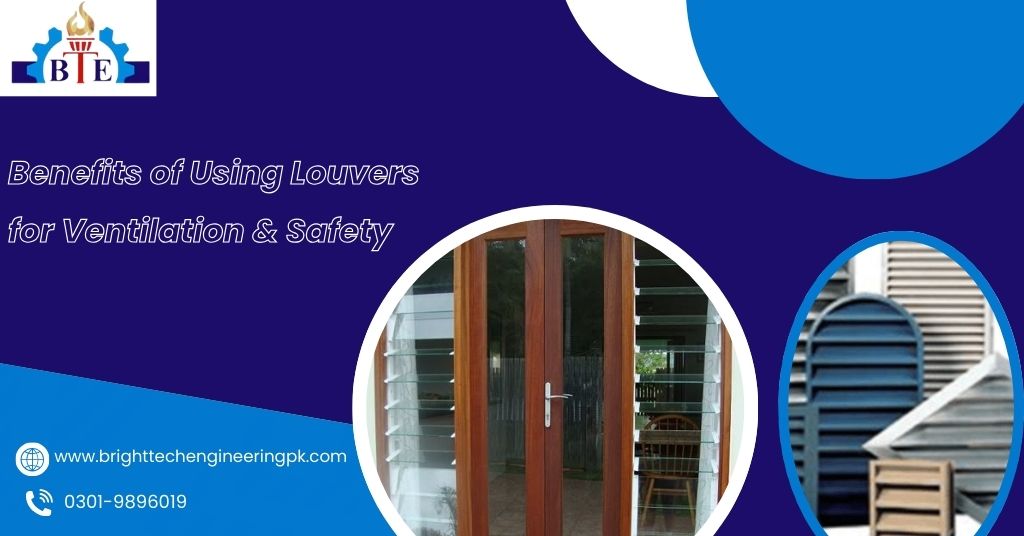
In modern construction, ventilation and safety play a crucial role in ensuring comfort, energy efficiency, and structural durability. Louvers are architectural features designed to allow air to flow in and out of buildings while keeping out rain, debris, and direct sunlight. Whether used in residential, commercial, or industrial projects, louvers contribute to both functionality and style. From window louvers fabrication to advanced designs in aluminum louvers and steel louvers, these systems have become essential in achieving safe, sustainable, and efficient environments.
What Are Louvers?
Louvers are slatted systems, often placed within windows, walls, or doors, that permit air circulation without compromising privacy or protection. They are available in different materials and finishes to suit diverse needs. With advances in window louvers fabrication, modern louvers can now be customised to match architectural styles while delivering outstanding performance.
For builders and architects, louvers are more than just a practical solution—they are part of the building’s design language, blending seamlessly with both traditional and contemporary aesthetics.
Improved Ventilation
One of the primary benefits of louvers is their ability to enhance ventilation. Buildings often require a natural way to regulate airflow to reduce reliance on artificial cooling systems. Aluminum louvers are particularly effective in this role, as they are lightweight, corrosion-resistant, and designed for durability in Australia’s varied climate.
Similarly, steel louvers provide robust airflow solutions for industrial spaces, where durability and strength are vital. By ensuring fresh air circulation, louvers maintain healthy indoor environments, reduce moisture buildup, and promote overall comfort.

Enhanced Safety and Security
Louvers not only improve airflow but also enhance safety. Through specialised window louvers fabrication, they can be built to resist forced entry, protect machinery, or prevent accidents in workplaces. Steel louvers, with their heavy-duty construction, are commonly used in high-security applications, such as warehouses and factories, where protection is non-negotiable.
Aluminum louvers, on the other hand, are often installed in residential or commercial properties, where they strike a balance between security and aesthetic appeal. Both options ensure that buildings benefit from fresh air without compromising safety.
Weather Protection
Louvers act as a shield against harsh weather conditions. Their angled slats are designed to deflect rain, direct wind, and filter sunlight. With expert window louvers fabrication, these systems are customised to withstand Australia’s demanding weather, from heavy rains to scorching heat.
Aluminum louvers resist corrosion and rust, making them ideal for coastal regions, while steel louvers provide unmatched resilience in industrial zones exposed to dust and debris. This durability means fewer maintenance requirements and a longer lifespan for building infrastructure.
Energy Efficiency
Modern building design focuses heavily on sustainability. Louvers play a vital role in reducing energy consumption by promoting natural ventilation and reducing the need for air conditioning. Installing aluminum louvers or steel louvers helps regulate temperature indoors, lowering electricity bills and contributing to eco-friendly building standards.
With window louvers fabrication, property owners can customise solutions that optimise shading and airflow, ensuring comfort without unnecessary reliance on mechanical systems.

Aesthetic Appeal and Design Flexibility
Beyond their functional benefits, louvers contribute to the visual identity of a building. Through creative window louvers fabrication, architects can design bespoke solutions that enhance facades, entrances, and interior spaces. Louvers are available in a wide range of colours, finishes, and profiles to complement different styles.
Aluminum louvers are particularly versatile, offering sleek finishes suitable for modern architecture, while steel louvers provide a more industrial aesthetic. Whether used as feature walls, window coverings, or screening systems, louvers combine form and function seamlessly.
Durability and Longevity
When investing in louvers, longevity is a key consideration. Both aluminum louvers and steel louvers are engineered for strength and resilience. Aluminium’s corrosion resistance makes it an excellent choice for residential and coastal properties, while steel’s durability is suited to industrial and high-traffic areas.
Custom window louvers fabrication ensures these systems are designed to last, reducing the need for replacements and offering long-term value for property owners.
Applications Across Different Sectors
Louvers are widely used across various sectors in Perth and beyond. In residential projects, they provide privacy, comfort, and energy savings. Commercial properties use aluminum louvers for stylish facades that double as functional shading devices. Industrial facilities often rely on steel louvers for robust ventilation systems that can withstand demanding conditions.
This versatility makes louvers an essential feature in modern construction, catering to diverse architectural and functional requirements.
Conclusion
When it comes to premium window louvers fabrication, BrighttechEngineering is a trusted name in Australia. Their expertise extends beyond aesthetics, ensuring every product delivers on performance, durability, and design. By offering high-quality aluminum louvers, they help clients achieve energy-efficient and visually appealing results tailored to modern building standards.
For projects that demand resilience and strength, BrighttechEngineering also provides steel louvers crafted to the highest specifications. Their commitment to excellence ensures every louver system is both functional and beautiful, making them a reliable choice for homeowners, architects, and builders alike.